Hidden Mold Damage After a Leak in Mesa Homes
A plumbing leak, appliance overflow, or roof problem may seem resolved once the visible water is gone. However, moisture can remain inside drywall, beneath flooring, or around cabinets where air movement is limited. In Mesa homes, hidden dampness may support mold growth even when the room appears dry. Finding the moisture source and understanding the full affected area are important before damaged finishes are repaired.
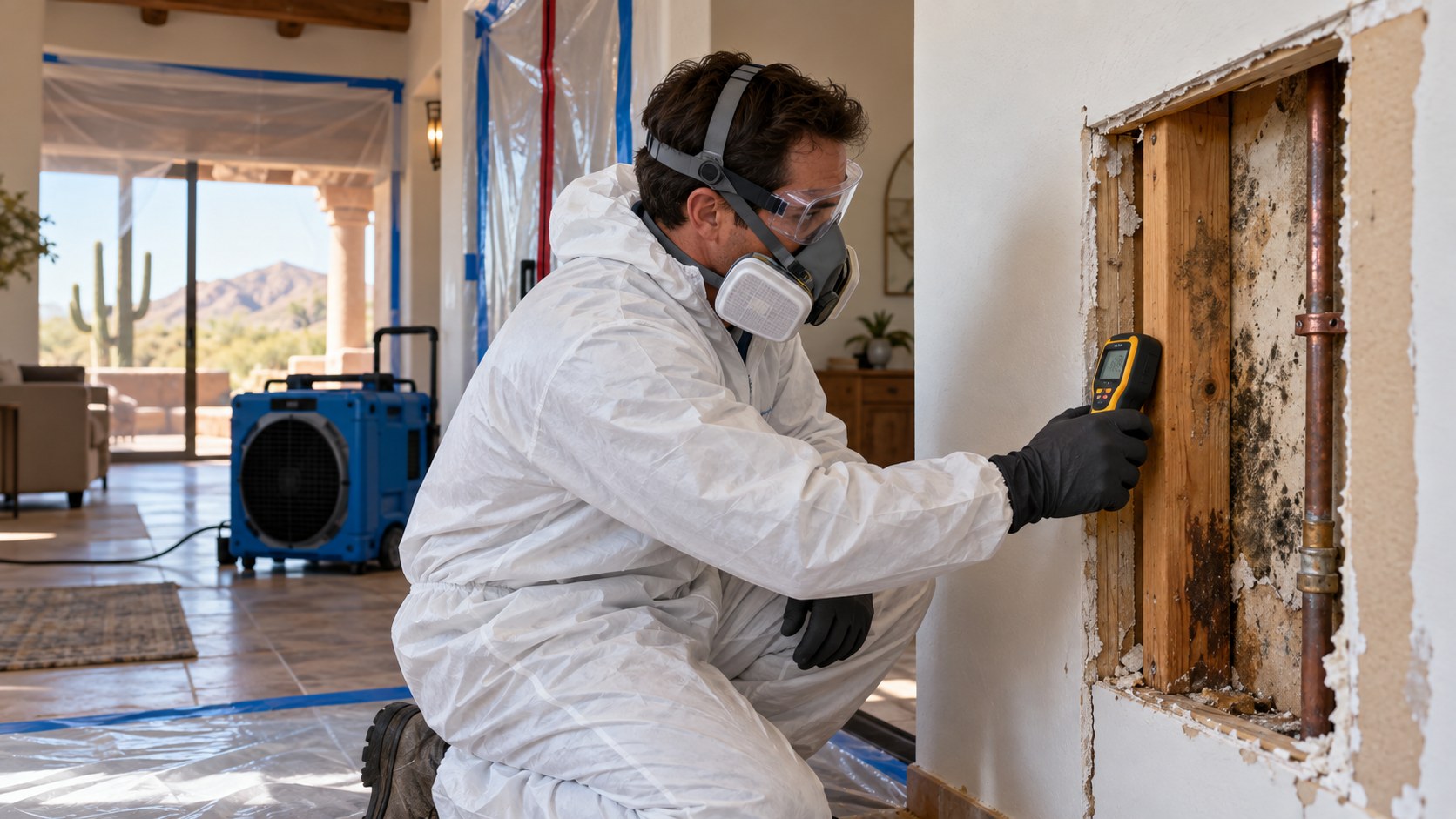
Where Mold Commonly Hides After Water Damage
Mold is not always visible on the finished side of a wall. An inspection may need to consider materials around and below the original loss, including:
- Drywall paper and insulation inside wall cavities
- Subflooring beneath tile, laminate, carpet, or hardwood
- Cabinet backs and toe kicks near kitchen or bathroom leaks
- Attic materials below roof or HVAC condensation problems
- Baseboards, trim, and framing around a previously wet area
Warning Signs That Deserve Attention
A persistent musty odor, recurring discoloration, peeling paint, soft drywall, warped flooring, or unexplained indoor humidity can indicate that moisture remains. Symptoms alone cannot identify the source or extent of mold, and appearance cannot confirm the species. A professional inspection can help determine whether testing, containment, material removal, or additional drying is appropriate.
Why the Moisture Source Comes First
Cleaning visible growth without correcting the leak may allow the same conditions to return. If the problem began with a pipe failure, storm intrusion, or appliance overflow, professional water damage restoration can help locate hidden moisture, dry affected materials, and establish a clearer scope before repairs begin.
What Professional Mold Remediation May Include
Inspection and Moisture Mapping
The property is evaluated for visible conditions, moisture patterns, and possible hidden affected areas. Air or surface sampling may be recommended depending on the situation and project requirements.
Containment and Air Control
Protective barriers and negative air pressure may be used to separate the work area from unaffected rooms. HEPA filtration helps capture airborne particles during removal and cleaning.
Removal and Detailed Cleaning
Porous materials that cannot be effectively cleaned may need controlled removal. Remaining surfaces can be HEPA-vacuumed and cleaned according to the site-specific plan. Rapid Restoration & Construction provides professional mold remediation in Mesa with containment, air-quality testing, and documentation support.
Drying and Final Verification
The underlying moisture condition should be corrected and affected materials dried before reconstruction. Depending on the scope, verification may include visual review, moisture readings, and other clearance steps appropriate to the project.
What Homeowners Should Avoid
Do not sand, scrape, or aggressively disturb suspected mold. Avoid blowing household fans directly across visible growth, as this may spread particles into other rooms. Painting over the area or using bleach on porous building materials does not address moisture trapped behind the surface.
Schedule Mold Remediation in Mesa
Rapid Restoration & Construction serves Mesa and surrounding East Valley communities with mold remediation, water damage restoration, and reconstruction services. Review more restoration guidance or call to schedule an inspection and discuss the next step for your property.
Call (480) 662-8146