Why Mold Remediation Should Address Moisture and Repairs Together
Finding mold is stressful, but removing what you can see is only part of the solution. Mold remediation in Mesa should also control the work area, identify the moisture source, remove affected materials safely, and verify that conditions are ready for repair.
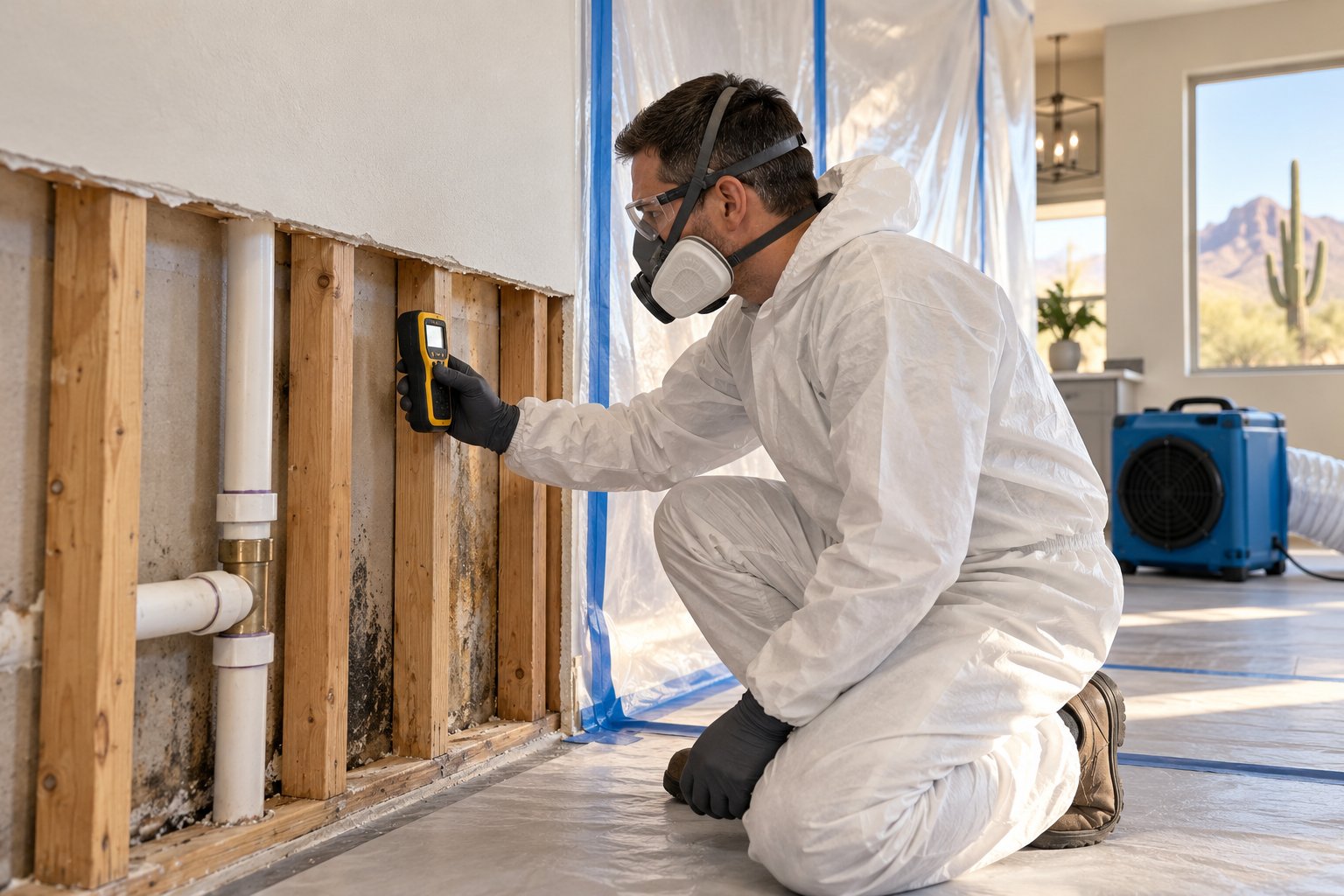
That connected approach matters in Mesa, Gilbert, and Chandler homes because a slow plumbing leak, roof intrusion, appliance failure, or past water event can leave moisture inside walls, cabinets, flooring, or insulation. If the source remains active—or damp materials are closed back in too soon—the same conditions that supported growth may remain.
Containment Helps Keep the Work Area Controlled
Mold-affected materials should not be disturbed casually. Cutting drywall, removing insulation, or pulling flooring can release particles into the surrounding air. A professional remediation plan may use sealed containment, negative air pressure, HEPA filtration, and careful material removal to limit movement beyond the affected area.
Rapid Restoration & Construction lists containment, negative air pressure, HEPA filtration, air scrubbing, and mold-affected material removal as part of its Mesa mold services. The scope still depends on the location, materials, and extent of the damage, so an on-site assessment should guide the plan.
The Moisture Source Has to Be Found
Mold is a moisture problem as much as a surface problem. A musty odor, staining, warped drywall, or recent leak history can point to damp conditions that deserve investigation. When the source involves a pipe break, appliance leak, or other active loss, water damage restoration services may be needed alongside remediation to extract water, dry structural materials, and monitor moisture levels.
Moisture readings help the team understand whether nearby materials are still wet. Drying and dehumidification can then be adjusted to the actual conditions rather than a visual guess. Correcting the leak or intrusion is equally important; otherwise, new materials may be installed over a continuing problem.
Removal and Reconstruction Should Follow One Plan
Some porous materials cannot be reliably cleaned after significant mold impact and may need to be removed. That can leave open wall sections, missing insulation, damaged trim, or flooring that requires repair. Planning remediation and reconstruction together reduces gaps between cleanup and rebuilding and helps ensure the area is dry before it is closed.
For property owners, this also creates a clearer record of what was found, what was removed, how moisture was addressed, and what repairs are recommended. If an insurance claim may apply, coverage depends on the cause of loss and policy terms. Photo documentation, moisture readings, and a defined scope can help support the conversation with the carrier.
Verification Is the Final Check Before Rebuilding
A clean-looking room is not the same as a verified remediation. Depending on the project, post-remediation review may include moisture checks, visual inspection, and clearance testing coordinated with an appropriate professional. The goal is to confirm that the work area meets the project criteria before reconstruction begins.
Get a Professional Mold Assessment in Mesa
If you notice visible growth, a persistent musty odor, or damage after a leak, avoid disturbing the area and arrange an assessment. Rapid Restoration & Construction serves Mesa and nearby East Valley communities, including Gilbert and Chandler. Request a mold inspection or call to discuss the next step.
Call (480) 662-8146