What to Do After Water Damage in Your Mesa Home
Discovering water inside your home can be overwhelming, whether the cause is a burst pipe, appliance leak, roof problem, sewage backup, or storm. The first few decisions matter because water can move beneath flooring, soak into drywall, and reach spaces that are difficult to see. Focus on safety, stop the source when possible, document the damage, and arrange professional help before attempting major cleanup.
Start With Safety
Do not enter standing water when electrical outlets, appliances, a damaged ceiling, or contaminated water may be involved. Keep children and pets away from the affected area. If you can safely stop the water at a fixture or shutoff valve, do so. For sewage or visibly contaminated water, avoid direct contact and wait for trained restoration professionals.
Protect the Property Without Taking Risks
If conditions are safe, take a few simple steps while help is on the way:
- Move small valuables and undamaged belongings away from the wet area.
- Take photos and short videos before moving or discarding damaged materials.
- Place containers beneath active drips when the ceiling is stable and electricity is not a concern.
- Avoid using a household vacuum, fan, or extension cord in or near standing water.
Do not pull up flooring, open walls, or remove wet materials unless a professional advises you to do so. Those actions can spread contamination or make insurance documentation more difficult.
Why Surface Drying Is Not Enough
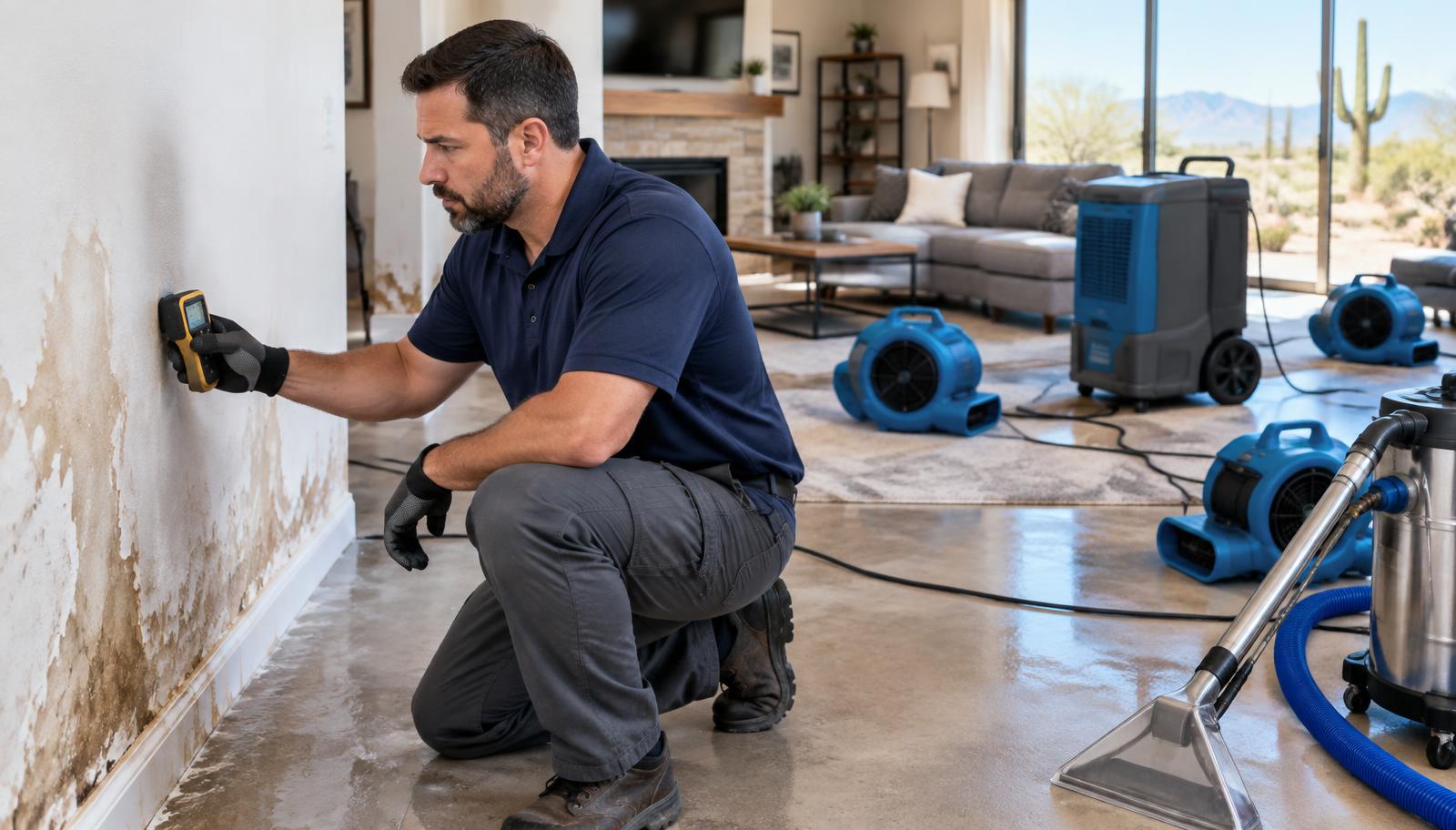
A floor or wall may feel dry while moisture remains underneath. Water can travel through baseboards, cabinets, insulation, subfloors, and wall cavities. Moisture meters and thermal imaging help technicians map the affected area and choose the right extraction and drying setup. Rapid Restoration & Construction provides water damage restoration in Mesa for water extraction, structural drying, moisture monitoring, and reconstruction when repairs are needed.
What Professional Restoration Usually Includes
1. Assessment and Moisture Mapping
The team identifies the water source, evaluates the type of water involved, checks safety concerns, and measures moisture in affected materials.
2. Water Extraction and Containment
Professional extractors remove standing water. Containment may be used to isolate affected or contaminated areas and keep the work zone organized.
3. Structural Drying and Monitoring
Air movers and dehumidifiers are positioned according to the drying plan. Moisture readings are checked during the process so equipment can be adjusted and drying progress can be documented.
4. Cleaning and Repairs
Materials that can be saved are cleaned and dried. Materials that cannot be restored may need removal and replacement. Reconstruction can then return the affected space to a usable condition.
Watch for Related Damage
Moisture that remains in building materials can support mold growth. If you notice musty odors or visible growth after a leak, learn about the company's mold remediation services. Water used during firefighting can also create a combined loss; the company's fire and smoke restoration services address cleanup needs following a fire-related event.
Get Water Damage Help in Mesa
Rapid Restoration & Construction serves Mesa and surrounding East Valley communities, including Gilbert, Chandler, Tempe, Scottsdale, and Apache Junction. The company offers 24/7 emergency response and works with insurance carriers to document covered losses. For immediate help, call and explain what happened, where the water is located, and whether any safety hazards are present.
Call (480) 662-8146 — 24/7