Where Smoke Damage Hides After a House Fire
Why soot, odor, and suppression water can affect rooms and materials beyond the visibly burned area — and why fire and smoke damage restoration in Mesa, AZ should begin with a property-wide assessment.
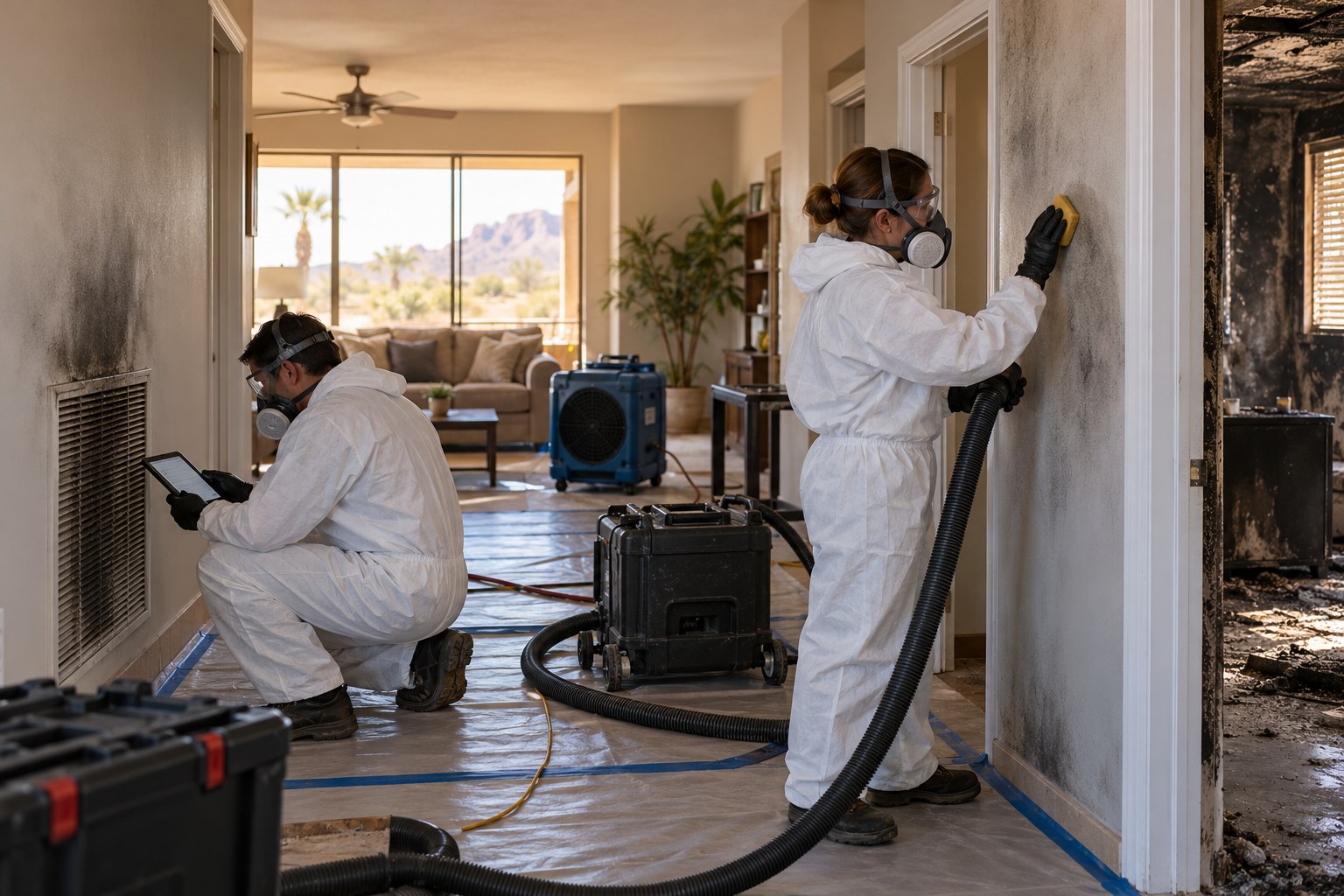
When the flames are out, the visible burn area is only part of the loss. Smoke moves with heat and air currents, carrying fine soot into adjoining rooms, closets, ductwork, and porous belongings. Fire and smoke damage restoration in Mesa, AZ, should begin with a property-wide assessment so cleanup follows the full path of the damage rather than stopping at the doorway.
Smoke Moves Into Adjacent Rooms
Soot can settle on walls, ceilings, trim, window coverings, and horizontal surfaces far from the fire's origin. Closed doors may slow movement but do not always stop it. Light residue can be easy to miss on dark finishes or textured surfaces, and wiping it with the wrong product may smear or set the soil instead of removing it.
HVAC Systems Can Carry Residue
If heating or cooling equipment operated during or after the fire, airborne particles may have entered return grilles, filters, ductwork, or mechanical components. Turning the system on before it is evaluated can redistribute residue. Rapid Restoration lists HVAC and duct cleaning after smoke as part of its fire-restoration services, with the scope based on the affected system and damage assessment.
Porous Materials Hold Smoke Odor
Upholstery, carpet, clothing, unfinished wood, insulation, and drywall can absorb smoke compounds. Some belongings may respond to specialized content cleaning, while others may not be safely or economically restorable. A documented pack-out helps separate affected items, identify what may be cleaned, and record losses for an insurance claim.
Suppression Water Creates a Second Problem
Firefighting can leave substantial water in flooring, wall assemblies, cabinets, and contents. That moisture may migrate beyond the burned room and remain hidden beneath finishes. Restoration planning should account for both smoke contamination and water damage, using professional water damage restoration with moisture readings and controlled drying before repairs conceal damp materials.
Odor Treatment Comes After Source Cleaning
Deodorization is most effective after soot and damaged materials have been addressed. The appropriate method depends on the source, affected materials, occupancy conditions, and extent of contamination. HEPA filtration, detailed surface cleaning, targeted deodorization, and sealing of certain porous materials may all be considered as part of the restoration plan.
A Whole-Property Assessment Protects the Recovery
Rapid Restoration & Construction provides 24/7 fire and smoke response from Mesa across the East Valley, including Gilbert and Chandler. Its services include emergency board-up, soot cleanup, odor removal, content pack-out, suppression-water removal, HVAC cleaning, structural repair, reconstruction, and insurance documentation. After the fire department clears the property, avoid disturbing soot or using affected systems until trained professionals have evaluated the damage. Because hidden moisture is a common secondary concern, prompt professional mold remediation is worth discussing when suppression water soaked the structure.
Need Help After a House Fire? Call 24/7
Call Rapid Restoration & Construction for 24/7 fire and smoke response in Mesa and across the East Valley. Wait for official clearance before entering, avoid disturbing soot-covered materials, and do not operate affected electrical or HVAC systems until they have been professionally evaluated.
Call (480) 662-8146