Burst Pipe Water Damage in Mesa AZ: What to Do First
What to do in the first hour after a pipe bursts, where the water hides, and how drying and repairs fit together for Mesa and East Valley homes.
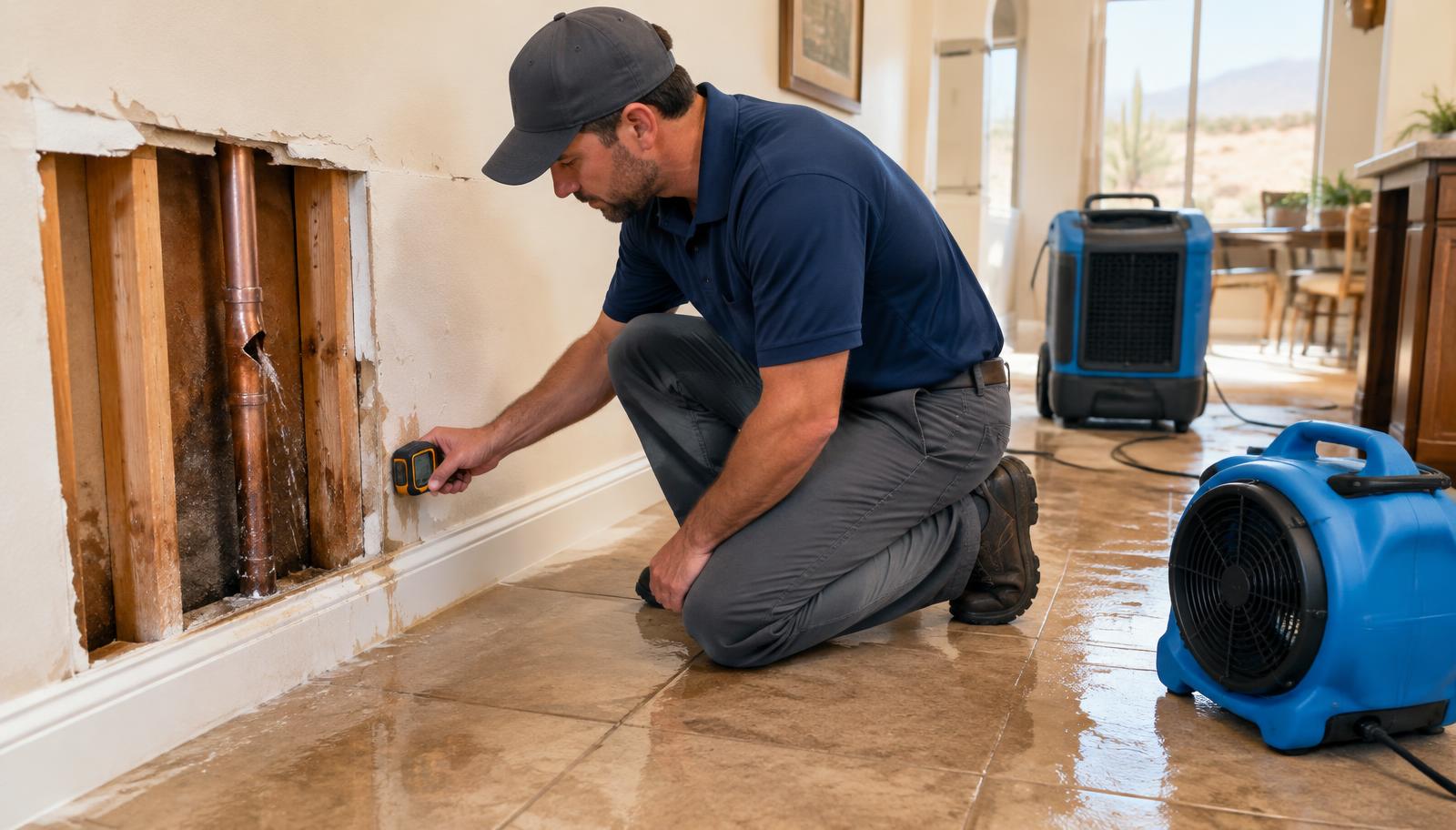
A pipe that bursts inside your house is one of those problems that goes from "what's that sound?" to "why is the carpet soaked?" in a hurry. If you are dealing with burst pipe water damage in Mesa AZ, the first hour matters, but so does what happens over the next few days. Water travels farther than it looks, and the damage you can see on the floor is usually only part of the story. Here is what to do right away, where the water tends to hide, and how drying and repairs fit together.
Stop the Water and Make the Home Safe
Before anything else, shut off the water. Most Mesa homes have a main shutoff valve near where the water line enters the house, often on an outside wall facing the street or in the garage. If you can find the valve for the broken line itself, such as under a sink or behind a toilet, that works too. Once the flow stops, open a faucet at the lowest point of the house to drain pressure from the lines.
Next, think about electricity. If water has reached outlets, power strips, appliances, or a ceiling with light fixtures, stay out of that area and turn off power to it at the breaker panel only if you can reach the panel without standing in water. If you are not sure it is safe, do not guess. Step outside and call for help.
A few more quick steps can help:
- Move rugs, electronics, paperwork, and furniture you can safely lift out of the wet area.
- Take photos and video of the damage, the broken pipe, and any affected belongings before cleanup starts.
- Avoid turning on the HVAC system if water has reached ductwork, returns, or the air handler.
Where Burst Pipe Water Damage in Mesa AZ Tends to Hide
Water follows gravity and the path of least resistance. A pipe that breaks inside a wall can send water down the inside of the drywall, under baseboards, and into the subfloor or slab edge before anything shows up in the room. A break in the attic or ceiling can soak insulation and drip into the rooms below over hours.
Behind Walls and Under Cabinets
Kitchen and bathroom cabinets are common trouble spots. The particleboard used in many cabinet bases soaks up water like a sponge, and the space behind the toe kick can stay wet long after the floor looks dry.
Under Flooring
Carpet pad holds a surprising amount of water. Laminate and engineered wood can trap moisture underneath, and tile can hide wet grout and setting materials. Swelling, cupping, or a soft feel underfoot are all signs that water got below the surface.
In Neighboring Rooms
Water does not respect room boundaries. It can wick through drywall and travel along framing into closets, hallways, and rooms that share a wall with the leak. That is why moisture readings throughout the area are more reliable than a quick look.
Why Fast, Thorough Drying Matters
Our dry desert air helps a wet towel dry quickly, but it does not do the same for the inside of a wall cavity or the space beneath a floor. Enclosed materials can stay damp for a long time, and damp building materials are where mold problems often begin. A box fan pointed at the wall usually moves air across the surface without reaching the moisture trapped underneath.
Professional water damage restoration in Mesa typically starts with emergency water extraction, then uses moisture detection tools to map where the water went. From there, structural drying and dehumidification equipment is set up for the specific materials involved, and readings are checked over the following days until materials reach a dry standard. Some materials, like soaked carpet pad or swollen cabinet bases, may need to be removed so the structure behind them can dry.
If the pipe leaked slowly for a while before it finally burst, there may already be growth hidden behind finishes. Our article on hidden mold damage after a leak covers the warning signs, and if growth is found, professional mold remediation should be planned together with the drying and repairs. You can read more about why that connected approach works in mold remediation and moisture control.
Clean Water vs. Contaminated Water
Water from a burst supply line usually starts out clean. That can change if it sits for a while, runs through dirty materials, or mixes with water from a drain line or toilet. A broken drain or sewer line is a different situation entirely, because that water can carry bacteria and other contaminants. In those cases, porous materials it touched are more likely to need removal, and it is best to keep kids and pets away until the area has been cleaned. Rapid Restoration & Construction handles Category 1, 2, and 3 water losses, including sewage backup cleanup.
A Few Words About Insurance
Many homeowners policies cover sudden and accidental water damage, such as a pipe that bursts without warning, but coverage varies by policy. Damage from a long-term slow leak, wear and tear, or mold is often limited or excluded, and sewage backup may require a separate endorsement. Read your policy, call your agent or carrier to report the loss, and ask what they need from you.
Good documentation helps that conversation. Rapid Restoration provides detailed photo documentation and moisture readings, and the team can walk you through the claim process. Your carrier makes the final call on what is covered.
Repairs and Getting Back to Normal
Once everything is dry, the rebuild can begin. That may include replacing drywall, insulation, baseboards, cabinets, or flooring. Closing walls up before materials are fully dry can trap moisture and lead to problems later, so the drying readings should guide the timing. Rapid Restoration & Construction offers full reconstruction services, along with content pack-out and restoration for belongings that need to be moved out during the work. If your home has been through other kinds of damage as well, the team also provides fire and smoke damage restoration.
For a broader look at the first steps after any water loss, see what to do after water damage in your Mesa home. You can also browse the full restoration blog for more guides for East Valley homeowners, including where smoke damage hides after a house fire.
Burst Pipe FAQs
Should I try to dry a burst pipe leak myself?
You can handle small, surface spills on hard floors with towels and a wet vac. When water has soaked into carpet, drywall, cabinets, or reached other rooms, professional moisture detection and structural drying help make sure hidden areas actually get dry.
Can I stay in my home while it dries?
Usually, yes. Drying equipment is designed to run while you live in the home, though larger or contaminated losses may make it more comfortable to stay elsewhere for a while.
Who repairs the broken pipe?
A licensed plumber should repair the pipe itself. Restoration focuses on removing the water, drying the structure, and repairing the damaged building materials afterward.
Do you serve areas outside Mesa?
Yes. Rapid Restoration & Construction is based in Mesa and serves Gilbert, Chandler, Tempe, Scottsdale, Apache Junction, and surrounding East Valley communities.
Burst Pipe? Call Rapid Restoration 24/7
If a pipe has burst in your Mesa, Gilbert, or Chandler home, shut off the water, stay clear of wet electrical areas, and call Rapid Restoration & Construction. A live person answers 24/7, and the team can start with extraction, moisture mapping, and a drying plan for your home.
Call (480) 662-8146